DESTINATION GUIDE // TANZANIA
Ngorongoro Crater
A collapsed volcano holding 25,000 animals on its floor and the best chance in East Africa of seeing black rhino.
260 km2
CRATER FLOOR
25,000
RESIDENT ANIMALS
600m
CRATER WALLS
1979
UNESCO SITE
Black rhino
RESIDENT

GENERAL OVERVIEW
About The Ngorongoro Crater
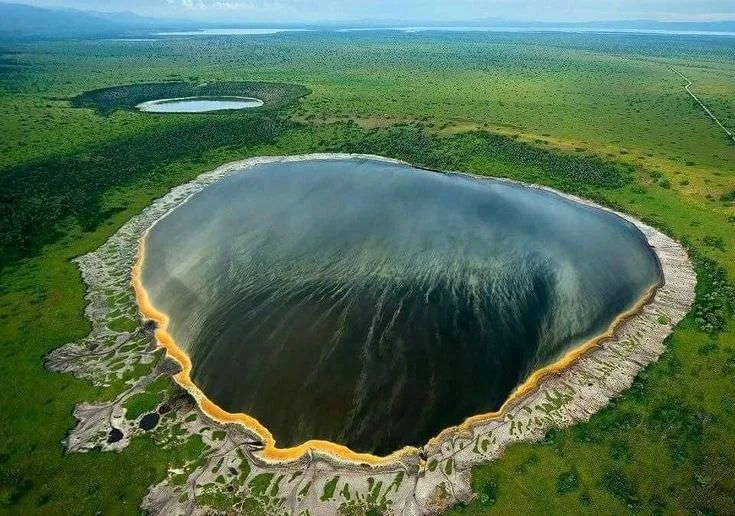
The Ngorongoro Crater is the collapsed caldera of a volcano that once stood higher than Kilimanjaro. It blew out and fell in on itself roughly two and a half million years ago, leaving a bowl 260 square kilometres across and 610 metres deep, with unbroken walls the whole way round. It is the largest intact inactive caldera in the world.
The crater sits inside the wider Ngorongoro Conservation Area, 8,292 square kilometres of highlands, forest and plain that UNESCO inscribed as a World Heritage Site in 1979. Unlike a national park, this is a multiple use area: Maasai communities live, graze cattle and raise families inside it alongside the wildlife, which is unusual anywhere in Africa and central to how the place works.
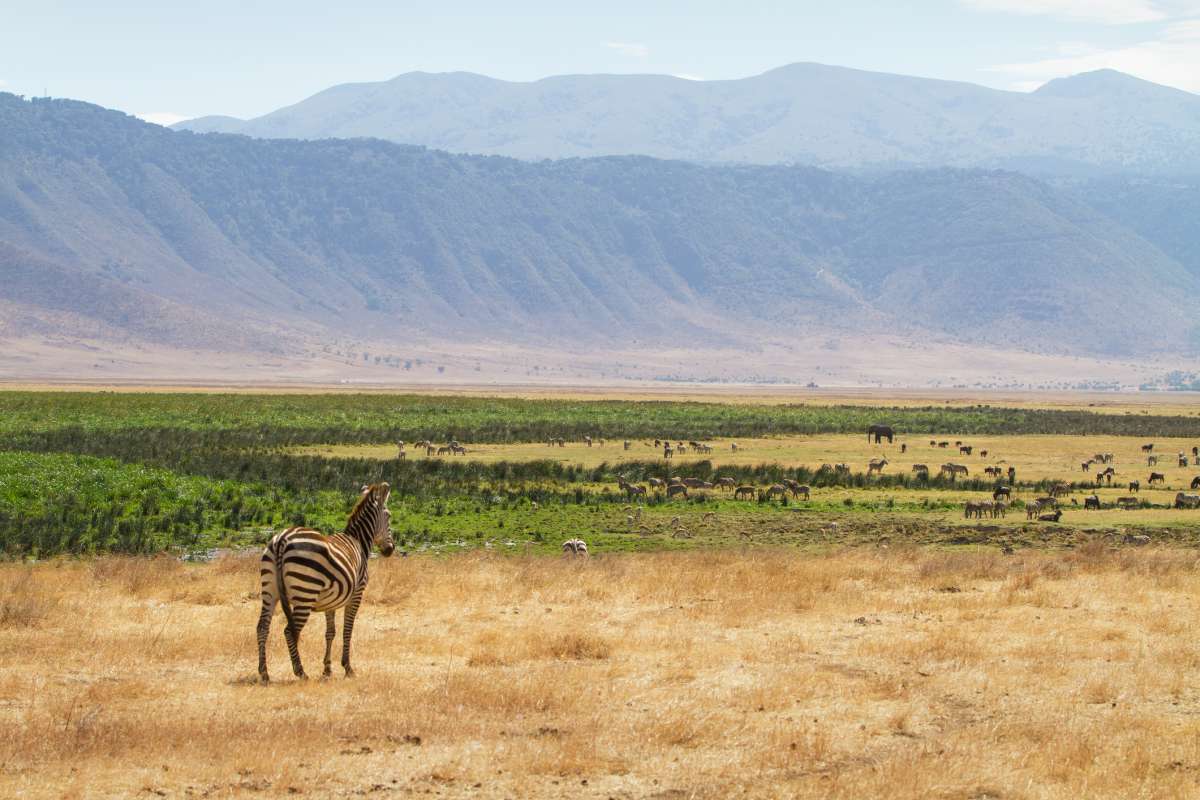
Around 25,000 to 30,000 large animals live on the crater floor, contained by the walls and fed by permanent water. The density is what people remember. You can see lion, elephant, buffalo, rhino and hippo within a few hours without leaving a space you could drive across in an afternoon.
WILDLIFE
What You Will Actually See
Black rhino. Around thirty animals live on the crater floor and this is the most reliable place in northern Tanzania to see one. They are usually distant, in the Lerai forest or out on the Gorigor swamp edge, so bring binoculars.
Lion. A dense resident population, often on kills in the open. The prides here are heavily studied and unbothered by vehicles.
Elephant. Mostly old bulls with exceptional tusks, drawn to the Lerai fever tree forest. Breeding herds tend to stay on the crater rim rather than the floor.
Buffalo, wildebeest and zebra. All in large resident numbers. These do not migrate, so the floor is full year round.
Hippo. Pods at Ngoitokitok Springs and Mandusi swamp.
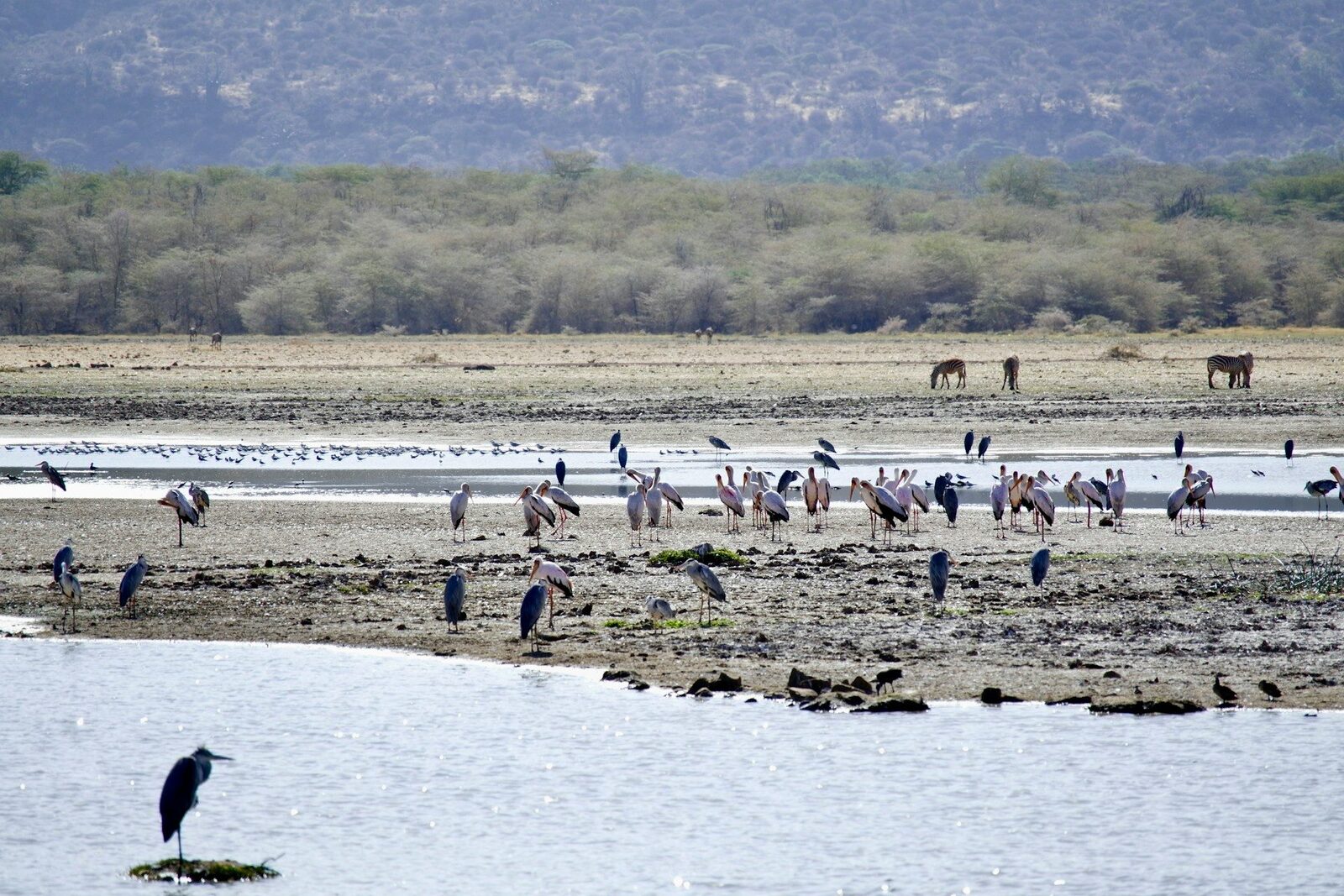
Flamingo. Lesser and greater flamingo on the soda water of Lake Magadi, in numbers that change with water level.
What is absent. No giraffe, because the crater walls are too steep for them, and no impala or topi. Cheetah are occasional and leopard uncommon.
THINGS TO DO
Activities In The Conservation Area
The crater floor game drive. The main event. Vehicles descend at 6am via the Seneto road and exit by Lemala. You have a six hour limit on the floor, which is enough and is strictly enforced.
Olduvai Gorge. The site where the Leakeys found hominin remains dating back 1.9 million years, with a modern museum on the rim. About forty five minutes from the crater on the road to the Serengeti.
Empakaai Crater. A smaller, deeper caldera to the north with a soda lake and flamingos on the floor. Reached on a guided walk down and back, around three hours, and almost empty of tourists.
Olmoti Crater. A shallow grassy caldera with a waterfall, reached on a gentle guided walk from Nainokanoka.
Maasai village visits. Arranged through the conservation authority with communities living inside the area.
Walking safaris. Permitted on the highlands and crater rim with an armed ranger, though not on the crater floor.
WHY VISIT
What Ngorongoro Is Known For
Density. Nowhere else in East Africa concentrates this much large game into a space this small. A single morning on the floor routinely produces lion, elephant, buffalo, hippo, hyena and thousands of zebra and wildebeest, with black rhino a realistic possibility rather than a long shot.
The setting is the other half. Driving down a 610 metre wall at dawn into a bowl filled with mist, then out onto open grass ringed by cliff on every side, is a landscape experience as much as a wildlife one.
And it is the human story. Maasai herding cattle among zebra inside a World Heritage Site is a working answer to a question most parks avoid, and Olduvai Gorge on the doorstep is where the human story itself was pushed back nearly two million years.
What it is not is wilderness. The floor sees a lot of vehicles in high season, and that is the honest trade for the density.
ENTRY FEES
Conservation Fees And Crater Charges
Ngorongoro is run by the Ngorongoro Conservation Area Authority rather than TANAPA, and the fee structure is different from the national parks.
Conservation fee. Around 70.80 US dollars per adult per day for non-residents, with reduced rates for children aged five to fifteen.
Crater service fee. Around 295 US dollars per vehicle for each descent onto the crater floor, charged on top of the conservation fee. This is per vehicle rather than per person, so it is far better value shared across a full vehicle than paid by a couple.
Concession and camping fees apply where you stay inside the conservation area. VAT at 18 per cent applies to Tanzanian park and conservation charges, and quoted rates vary as to whether it is included.
All fees are prepaid electronically before arrival. We itemise them in your quote so you can see exactly what the crater descent is costing.
BEST TIME TO VISIT
When To Go
June to October, the long dry season. The most reliable game viewing, clear skies and firm roads. Also the busiest, with a noticeable number of vehicles on the floor in July and August.
December to March. Excellent, and this is when the wildebeest calving happens on the short grass plains around Ndutu in the southern conservation area, which is a spectacle in its own right.
April and May, the long rains. Green, quiet and cheap. Crater descent roads can be difficult and mist often sits in the bowl until mid morning.
November, the short rains. Afternoon showers with usable mornings and good value.
The crater floor holds resident game all year, so unlike the Serengeti there is no wrong season for wildlife here.
GETTING THERE
How To Reach The Crater
By road from Arusha. Around 180 km to Lodoare gate, three to four hours on tarmac to Karatu and then a short climb to the rim.
From Tarangire. Two to three hours, which is why the two open almost every northern circuit.
From the Serengeti. Three to five hours depending on which part of the Serengeti you are leaving, on the road past Olduvai Gorge.
By air. The nearest airstrip is Lake Manyara, about an hour and a half from the rim, with scheduled flights from Arusha and the Serengeti.
On the floor. Descent is by 4×4 only, on one way roads, with a strictly enforced six hour limit and no exit after 6pm.
WHERE TO STAY
Lodges On The Rim And Beyond
&Beyond Ngorongoro Crater Lodge. On the rim with the most theatrical interiors in East Africa and a view straight down into the bowl. The most expensive address here.
The Highlands. Domed suites on the Olmoti slopes north of the crater, remote and quiet.
Ngorongoro Serena Safari Lodge and Ngorongoro Sopa Lodge. Larger rim properties with crater views, mid to upper range. Sopa sits on the eastern rim and is closest to the Lemala descent.
Gibb’s Farm. A working coffee farm outside Karatu, one of the loveliest places to stay in northern Tanzania, half an hour below the rim.
Karatu town. A wide range of mid range and budget lodges, half an hour from the gate and considerably cheaper than the rim.
Rim lodges save you an early drive but cost a premium. Karatu is the sensible compromise for most itineraries.
TRAVEL TIPS
What To Know Before You Go
Altitude and cold. The rim sits at around 2,300 metres and mornings are genuinely cold. Bring a fleece and a warm jacket, which surprises people who packed for safari heat.
The six hour limit. Enforced from the moment you descend. Going down at 6am rather than 9am makes a real difference to what you see.
Vehicle sharing. The 295 dollar crater fee is per vehicle. Two people pay the same as six, so if you are a couple, ask us about the cost before assuming a private descent.
Binoculars. Essential for rhino, which are almost always distant.
No off road driving. Strictly prohibited on the floor and enforced.
Picnic sites. Ngoitokitok is the designated lunch spot, and the black kites there will take food from your hand. Eat inside the vehicle.
Malaria. Low risk at rim altitude but present on the lower routes. Prophylaxis is advised.
TOURS WITH US
Safaris With Sola Safari Travels
Ngorongoro appears on nearly every northern circuit we run. The standard pattern is Tarangire, then two nights near the crater with a full morning descent, then on to the Serengeti past Olduvai Gorge.
We put you at the gate for a 6am descent rather than mid morning, which is the single biggest difference between a good crater day and an average one. Conservation and crater fees are prepaid and itemised, and the whole trip runs in a private 4×4 with a driver guide who knows the floor roads.
SAFARI PACKAGES
Safaris That Include Ngorongoro
The crater sits on every northern circuit, usually between Tarangire and the Serengeti. All departures are private.
5 DAYS / 4 NIGHTS
5 Days Serengeti and Ngorongoro Safari
The endless Serengeti plains and a full morning on the Ngorongoro crater floor.
From $1,100 per person

7 DAYS / 6 NIGHTS
7 Days Kenya and Tanzania
The Masai Mara, Serengeti and Ngorongoro Crater in one crossing. Our most booked route.
From $1,590 per person

10 DAYS / 9 NIGHTS
10 Days Ultimate East Africa
Amboseli, the Masai Mara, the Serengeti and the Ngorongoro Crater at an unhurried pace.
From $2,360 per person
KEY QUESTIONS
Ngorongoro Safari, Key Questions
Around 70.80 US dollars per adult per day as a conservation fee, plus roughly 295 dollars per vehicle for each descent onto the crater floor. The crater fee is per vehicle, not per person, so it works out far better shared across a full vehicle. VAT at 18 per cent applies to Tanzanian charges.
This is the most reliable place in northern Tanzania for them, with around thirty animals on the floor, but sightings are usually distant, in the Lerai forest or on the swamp edges. Bring binoculars and treat a close sighting as luck rather than expectation.
Six hours, strictly enforced from the moment you descend. Going down at 6am rather than mid morning makes a real difference, since the light is better and the predators are still active.
No. The crater walls are too steep for giraffe to descend, so they are absent from the floor although they live in the wider conservation area. Impala and topi are also absent.
In July and August the floor sees a lot of vehicles, and that is the honest trade for the wildlife density. An early descent, before the mid morning arrivals, is the best way to have space around a sighting.
Rim lodges give you the view and a shorter drive to the descent road, at a significant premium. Karatu is half an hour below and considerably cheaper. For most itineraries Karatu is the sensible choice, with an early start covering the difference.
EXPLORE MORE
Pair Ngorongoro With Other Destinations
Ngorongoro is the hinge of the northern circuit, with the parks either side of it within a few hours.



Your Ngorongoro Safari Starts Here
Tell us your dates and group size. We will reply within 24 hours with a tailor made proposal and a clear price.
TAILOR MADE SAFARI
Want to Know More? Talk to Us
Create an unforgettable memory with a customised Kenya or Tanzania safari. Tell us how you like to travel and our safari experts will shape the route around you, with no obligation.
Phone: +254 736 992 608
Email: info@solasafaritravels.com

